
Reviewed & rated by customers


Member of & trained to industry standards


Credentials & standing
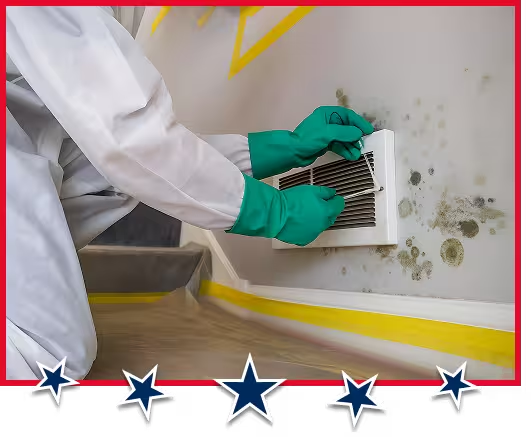
Moisture problems are a fact of life in coastal Georgia, and when they go unchecked, mold growth can develop quickly. If you need mold inspection in Savannah, it’s important to work with NORMI-certified professionals who understand the impact of coastal humidity, frequent rain, and older building materials common throughout the Lowcountry.
Our NORMI-certified mold inspectors in Savannah work with homeowners and businesses to uncover hidden mold, pinpoint moisture sources, and help reduce long-term structural and indoor air quality risks. Whether the concern involves a leaking roof, damp crawl space, or persistent humidity, our local team provides straightforward answers you can rely on.
In a coastal environment like Savannah, mold can develop rapidly when moisture intrusion, poor ventilation, or water damage is overlooked. Choosing experienced mold inspection services in Savannah, GA ensures these conditions are identified before they lead to larger problems.
Our mold inspection process is designed to uncover both obvious and concealed mold issues using advanced diagnostic tools and established inspection protocols. We focus on identifying the conditions that allow mold to grow—not just what’s visible on the surface.
What Our Mold Inspections Evaluate
A professional mold inspection helps property owners make informed decisions and avoid unnecessary repairs or ongoing moisture-related issues.
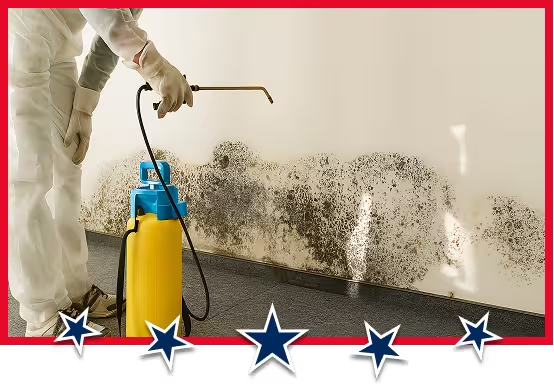
Each inspection is performed using industry-recognized standards to ensure accurate, unbiased results for
residential and commercial properties across Savannah and nearby coastal communities.
Accessible areas such as walls, ceilings, bathrooms, kitchens, crawl spaces, basements, and attics are carefully examined for visible mold growth, moisture staining, material deterioration, and structural concerns.
When mold is suspected but not visible, air and surface samples may be collected to confirm indoor mold conditions and evaluate potential air quality concerns.
Professional moisture meters and hygrometers are used to measure moisture levels and identify conditions that promote mold growth. This step also helps trace water intrusion back to its source.
After the inspection, findings are clearly explained, and recommendations are provided. This may include professional mold remediation or moisture control strategies depending on the conditions identified.
Thermal imaging technology allows inspectors to locate hidden moisture behind walls, under flooring, and within insulation that may not be visible during a standard inspection.
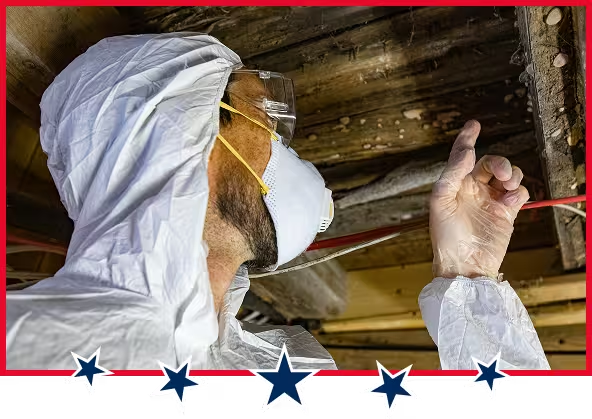
Savannah homes are especially susceptible to mold due to crawl spaces, older construction, roof leaks, plumbing issues, and consistently high humidity levels.
Common inspection areas include:
Commercial properties face unique challenges where moisture issues can disrupt operations and affect occupants. Mold inspections help identify risks before they impact employees, customers, or compliance requirements.
Properties we inspect include:
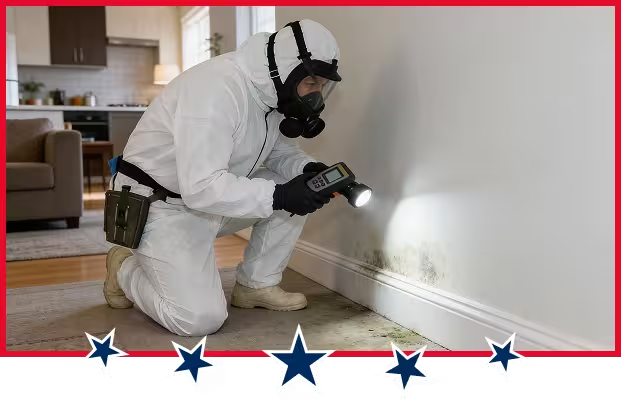
Property owners often use the terms inspection and testing interchangeably,
but they serve different purposes during the evaluation process.
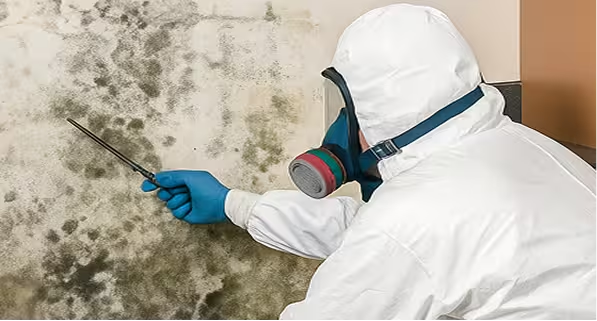
A mold inspection focuses on determining whether mold is present, identifying moisture sources, and evaluating environmental conditions that contribute to mold growth.
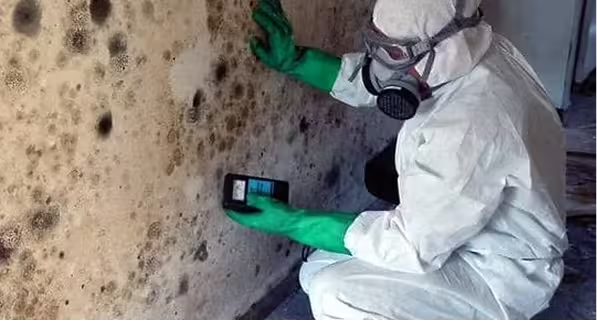
Mold testing involves laboratory analysis to identify mold types and spore concentrations when additional verification or documentation is required.

A mold inspection is recommended if you notice:
Addressing moisture and mold concerns early helps prevent structural damage and long-term indoor air quality issues.

Whether you have a question about our services, pricing or anything else, our team is ready to help you get the service you require.
Safeguard your home or business with professional mold inspection services provided by NORMI-certified Savannah inspectors committed to accurate assessments and clear communication.